Customer journey in grocery retail: how to improve the omnichannel shopping experience
14/10/2026

Andrea Borgomaneri
Sectors
Categories
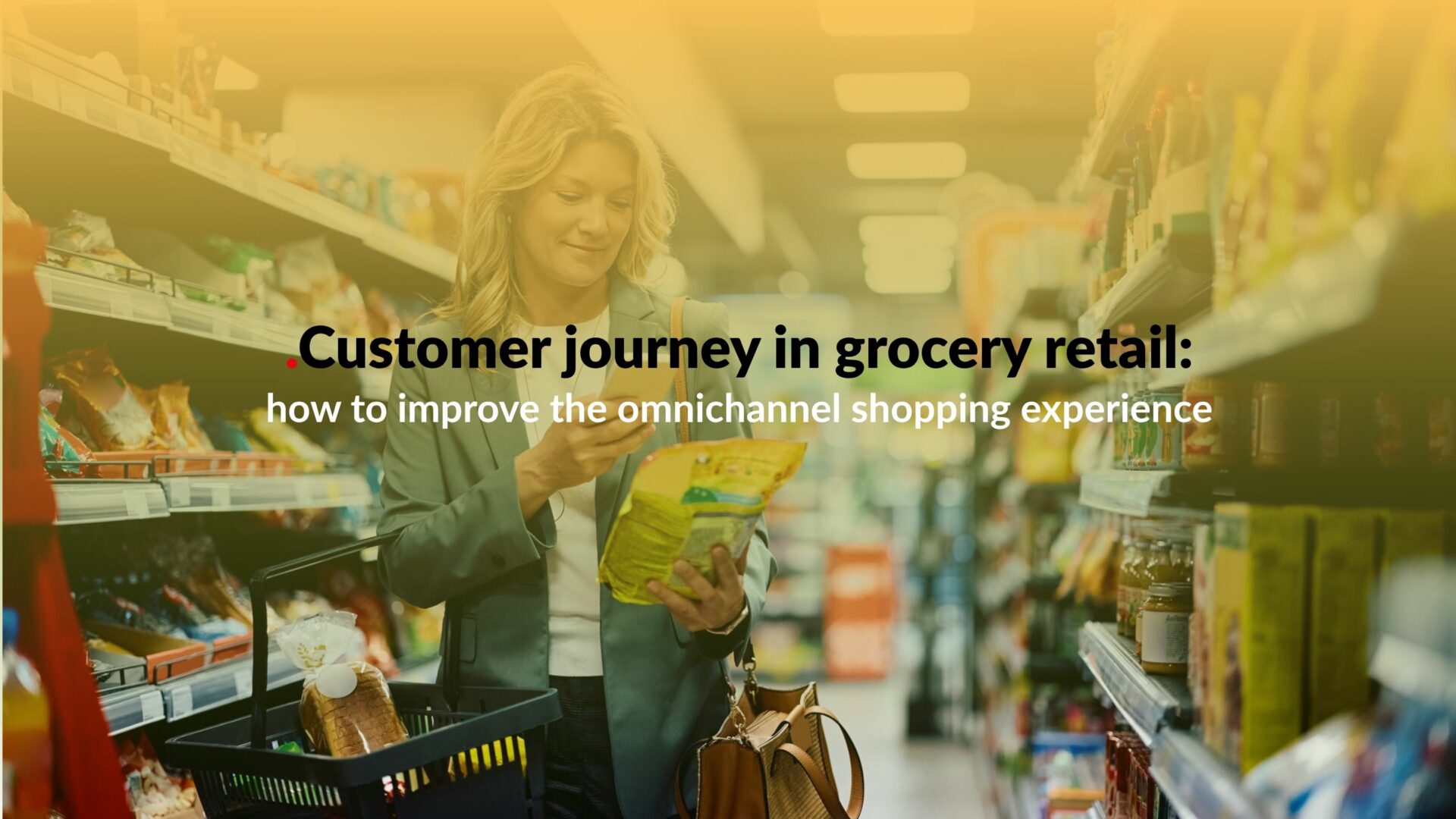
In grocery retail, the customer relationship is not built at the checkout alone, nor does it begin when someone walks into the store.
Purchase decisions are shaped much earlier: when shoppers prepare their shopping list, compare products and offers, and choose the most convenient way to shop. They continue inside the store, at the shelf, and even after checkout.
For retailers, the real challenge is therefore to be present throughout the entire grocery retail customer journey, creating a consistent experience across digital channels and the physical store.
Planning is already a crucial stage of the purchasing journey.
Imagine a customer adding “tiramisu for six people” to a digital shopping list. An advanced platform can suggest the ingredients needed, bring up products the customer buys regularly, and recommend alternatives that match their preferences or the retailer’s commercial strategy.
The use of artificial intelligence at this stage is no longer just a future scenario. According to McKinsey data from 2026, 12% of consumers have already used AI tools to organise their grocery shopping, while 28% of Gen Z say they are interested in doing so.
Some estimates also suggest that, by 2030, AI agents could handle retail purchases worth between $3 trillion and $5 trillion.
The point is simple: a growing share of purchase decisions may be made before the customer even reaches the supermarket.
Historically, many loyalty strategies in grocery retail have focused on loyalty cards, points programmes, coupons and promotions.
These are important tools, but they often engage the customer when a significant part of the decision-making process has already taken place.
Today, loyalty is also becoming less tied to a single retailer. The same consumer may choose different retailers depending on product category, price, convenience or the type of experience they want at that particular moment.
In other digital environments, customers are already used to receiving personalised recommendations, quickly finding their usual purchases and completing tasks in just a few steps.
This is why loyalty can become more effective when it is treated not simply as a rewards programme, but as part of a broader relationship built throughout the entire shopping journey.
If the pre-visit phase helps shape intentions, it is often inside the store that the final choice is made.
At the shelf, customers compare products, change their minds, add unplanned items and look for alternatives when something is out of stock.
This is precisely where digital technology can have a tangible impact on the experience.
Customers can be guided towards the product they are looking for, receive relevant recommendations, quickly find an alternative when an item is unavailable, or complete payment without using a traditional checkout.
These services reduce friction and save time, making the shopping trip easier.
For the retailer, this means turning the physical store into a touchpoint that is connected with every other channel, rather than treating it as a separate experience.
The value comes from connecting the different stages of the shopping journey instead of managing them as separate experiences.
Customers can start by choosing how they want to shop: home delivery, click and collect, drive-to-store or a traditional store visit.
They can open a saved shopping list, add recommended products, use the app during the visit, navigate the aisles, access relevant promotions and pay through self-scanning or digital checkout systems.
After the purchase, the information collected can help make the next shopping experience even easier and more personalised.
This creates a continuous cycle in which each interaction informs the next.
A connected journey also creates value for the retailer.
It not only increases sales opportunities, but also provides a more complete understanding of customer behaviour.
The receipt tells you what was bought. A digital customer journey can also provide information about what happened before the transaction: what customers searched for, added to their list, compared or eventually replaced.
This visibility helps retailers understand preferences and habits while they are still taking shape, rather than only after the purchase has been completed.
Retailers can then work on assortment, promotions and services using a broader base of information, while improving both the relevance of the experience and customer loyalty.
This is the approach behind RetAPPs, now part of the Aton Group, with SmartBip.
The platform, adopted by 17 grocery retail banners, was designed to connect the different touchpoints along the shopping journey and support customers before, during and after the shopping trip.
The goal is to move beyond the separate management of apps, loyalty, e-commerce, stores, self-scanning and checkout, turning them into parts of a single connected experience.
For retailers, the question therefore becomes less “which digital tools do we have?” and more “how well are they actually connected across the customer journey?”
This is also the focus of the webinar “Omnichannel grocery retail: how can every stage of the shopping journey be connected?”, which explores how to build a more integrated experience across digital channels and the physical store.
The omnichannel customer journey in grocery retail connects every interaction between the customer and the retailer before, during and after the shopping trip. It brings together apps, e-commerce, loyalty, the physical store and checkout to create a consistent, seamless experience across digital and physical channels.
Artificial intelligence can support shopping planning, recommend products based on customer preferences and suggest relevant alternatives. When integrated into digital channels, it helps retailers personalise the experience and influence purchase decisions even before the customer enters the store.
Loyalty helps build an ongoing relationship with the customer beyond the point of purchase. By connecting data, preferences and interactions across apps, e-commerce and the physical store, retailers can offer more relevant services and promotions, improving both the customer experience and retention.
Integration requires a platform that can connect the different touchpoints and share information throughout the shopping journey. SmartBip by RetAPPs, part of the Aton Group, connects apps, loyalty, e-commerce, self-scanning and checkout, enabling a consistent omnichannel experience.
An omnichannel customer journey helps retailers gain a deeper understanding of customer preferences, even before a purchase is made, and use this insight to improve assortment, promotions and services. Connecting digital channels with the physical store can create more sales opportunities and strengthen customer loyalty.