When technology makes room for people: the Service Desk in fashion retail
08/10/2026
People who work in a store are hired for their ability to know the product and understand the person in front of them, building a relationship that becomes part of the customer experience. Managing a technical issue with a POS system or an application requires a completely different set of skills.
Tech training is now part of every job. Knowing how to use digital tools well is essential; having to manage their technical complexity as well, however, shifts the shop assistant’s attention away from the job they were hired to do. In fashion retail, their value still lies above all in the customer relationship and their knowledge of the brand.
Technology in store should support this work almost invisibly, making operations easier and allowing information to be retrieved exactly when it is needed. When it works, it frees up time and attention. When it does not, it absorbs both.
Often, all it takes is a minor disruption, an unclear procedure or a tool that does not respond as it should. Taken individually, these may seem like small issues, but over the course of a working day they become constant interruptions that shift the person’s focus from what they should be doing to what they need to fix.
When technology stops being seamless and becomes an obstacle, the impact goes beyond day-to-day operations. The shop assistant loses time and concentration and, over time, peace of mind too, often while a customer is waiting in front of them. This affects both the shopping experience and the perception of the brand they represent.
The tools a company provides to its people, together with the support it offers when something goes wrong, also say a great deal about how it values their work. An employee who is left alone to deal with a technical problem experiences not only the disruption itself, but also the gap between what they are expected to do and the conditions they are given to do it well.
This is part of the employee experience too. Creating the right conditions for people to work well also means protecting them from technical complexity that should be managed elsewhere. Processes and tools need to reflect the real context of the store, where the customer is present and a response is often needed quickly.
The store should be a tool that serves both the customer and the shop assistant, rather than becoming an environment that requires time and energy every day just to keep it under control.
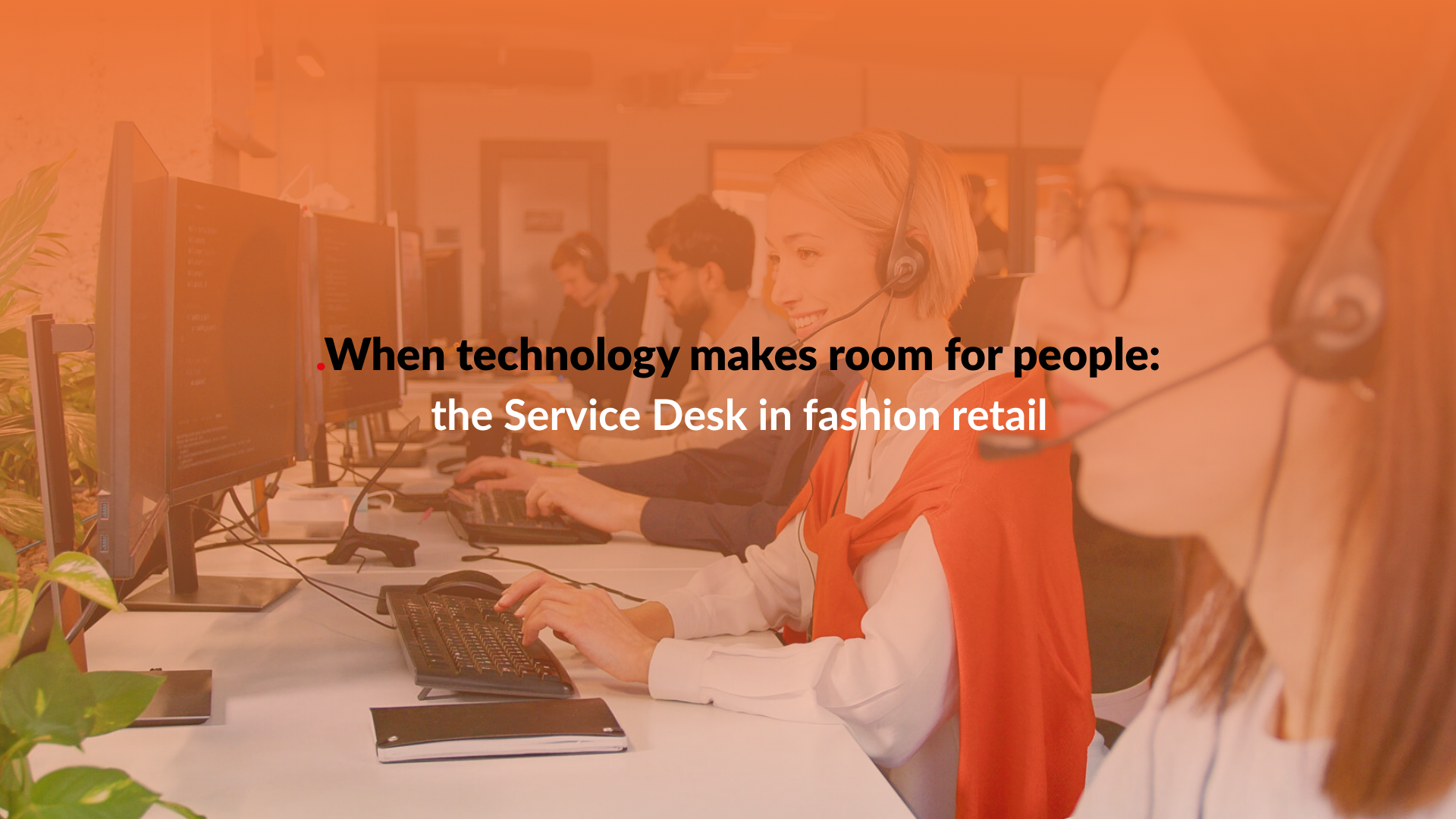
In this context, a Service Desk for fashion retail delivers value that goes far beyond technical support. It becomes a single point of reference that understands the store environment, takes ownership of the request and coordinates the parties involved, so the shop assistant does not have to deal directly with different technical contacts and systems.
This means avoiding a situation where every store has to come up with its own solutions, relying on the “most technical” person in the team or on informal knowledge that changes as people come and go. Technical know-how is managed within a structured IT support process, while the store receives a clear, practical response that is easy to act on.
Today, this support also includes artificial intelligence. Within the Service Desk, generative AI can make information and the knowledge base easier to access, helping store teams find answers more quickly in recurring situations.
This is also where we are continuing to develop tools such as AI Layer Translator, designed to support international environments, and AI Call Manager, which helps manage calls and support requests. Their development starts by listening to the people who use the Service Desk every day and to the situations that emerge in the field.
As a result, shop assistants spend less time searching for a solution, while Service Desk operators can focus on cases that require experience and more in-depth assessment.
The result is tangible: time given back.
Time that the shop assistant can once again devote to the customer and to sales, with greater peace of mind. Knowing that technology is being managed by people with the right expertise makes it easier to focus on the job at hand, and this is reflected on the other side of the counter too, in the way the person can once again be fully present in the relationship with the customer.
Putting people at the centre also means allowing technology to do its job and giving shop assistants back the time and attention they need to do theirs.
We will explore these topics in our webinar on 22 October, starting from the situations we encounter every day in stores and the experience we have built up in the field. We will look at how to create a support model that can manage technical issues while giving time back to the people working in store, so they can focus on the activities that create value for both the customer and the brand.
The Service Desk reduces the time shop assistants spend dealing with technical issues. It takes ownership of requests and coordinates the different IT stakeholders involved, allowing store staff to focus on the customer, sales and their knowledge of the brand.
Generative AI can speed up access to information and the knowledge base for recurring issues. Tools such as AI Layer Translator and AI Call Manager can also support international environments and call management, allowing Service Desk operators to focus on cases that require greater expertise.
Structured IT support protects shop assistants from technical complexity and interruptions that take their attention away from the customer. Making technology issues easier to manage improves working conditions and gives people more time to focus on higher-value activities.
Centralising support is particularly useful when stores use different systems and problem resolution depends on informal in-house expertise. A structured Service Desk brings technical know-how together, coordinates the different parties involved and provides stores with a single point of contact.
Operational continuity requires a structured support process that can take ownership of requests quickly and coordinate the technical teams involved. The Service Desk prevents shop assistants from having to find solutions on their own, reducing interruptions that can affect both sales and customer service.