GS1 Sunrise 2027: towards the digital twin of the consumer product?
30/07/2026
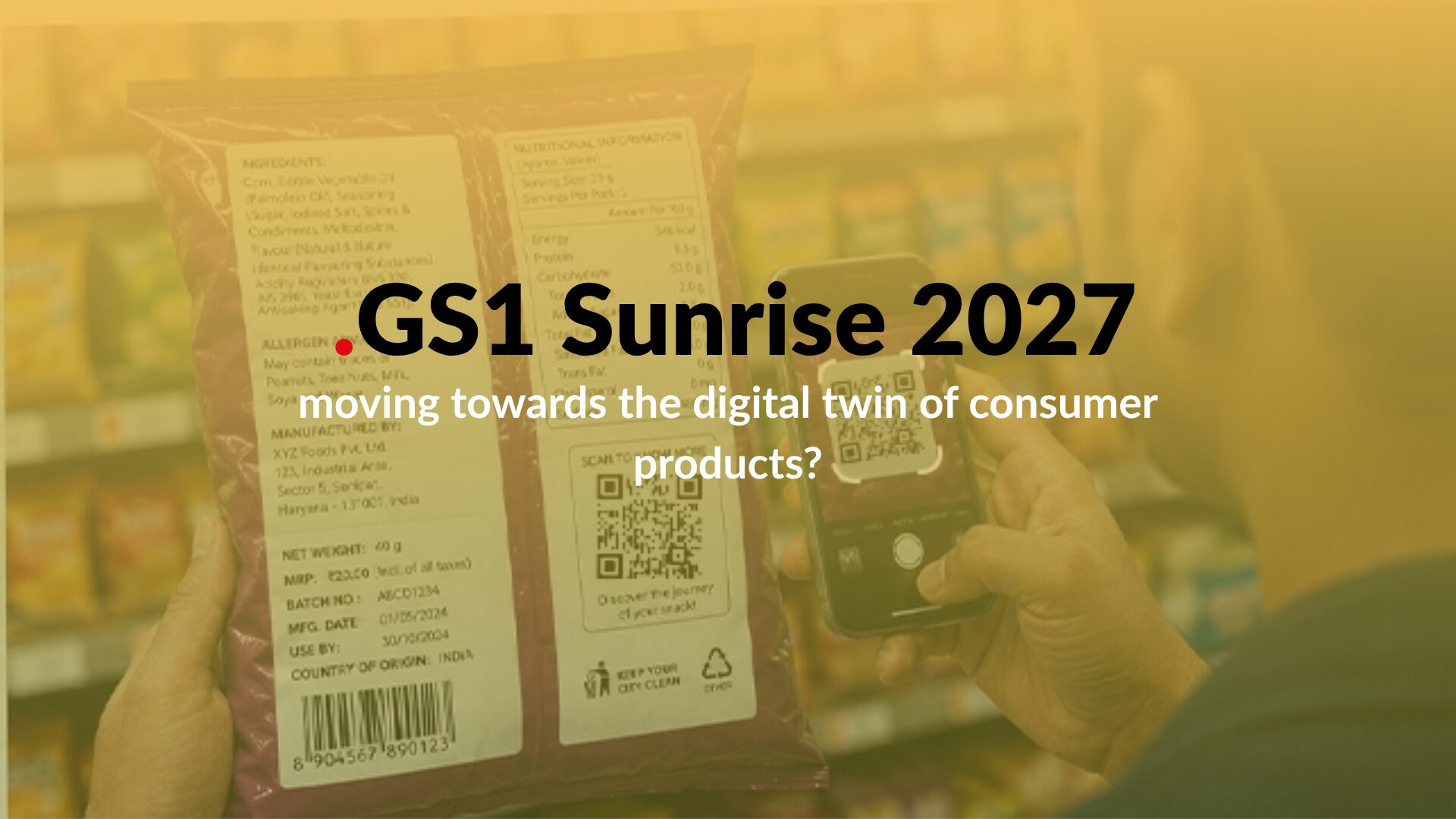
For 50 years, the barcode has done one thing: identify a product at the checkout. With GS1 standard QR codes, the same symbol can connect checkout, supply chain and digital content, opening up new opportunities for traceability, operational efficiency, transparency and consumer engagement.
GS1’s objective is clear: in the future, every retail checkout in Europe should be able to read standard two-dimensional codes, GS1 standard QR codes or DataMatrix codes, alongside or as a replacement for the traditional EAN-13/UPC. This is the shared intention of more than 20 major global companies, including manufacturers, retailers and marketplaces, as well as leaders in consumer goods and international distribution, which have signed up to the Sunrise 2027 programme.
The starting point is a structural limitation that retailers know well: the familiar “beep” at the checkout when an EAN-13 is scanned identifies a product, but does not carry any additional information. GS1 standard 2D codes can contain the GTIN, batch number, expiry date and serialisation data, and can link to digital content available online. The code is no longer just an identifier: it becomes the connection between product, data and services.
The applications are wide-ranging: accurate inventory management, more effective recalls, automatic expiry-date checks, product storytelling and, just as importantly, reputation management. They also enable more transparent communication with consumers, including on traceability and sustainability.
For retailers and distributors operating in trade and food service, the main benefit lies in optimising product management and operations. Expiry date and production batch, in particular, are pieces of information that can strengthen food safety, ensure more granular product traceability and reduce waste, especially for products with a short shelf life.
For the food industry, the use of GS1 standard QR codes opens the way to far more precise product management. Including dynamic attributes such as batch and expiry date improves traceability, makes recall management more effective and strengthens food safety across the entire supply chain. At the same time, the GS1 standard QR code becomes a dynamic access point to content that can be updated over time, even when the packaging remains the same.
There is also a less obvious advantage: the possibility of opening up a direct communication channel with consumers. Ingredients, allergens, nutritional values, certifications, instructions for use and sustainability information become easily accessible via smartphone or through an in-store kiosk. The product stops being static and becomes a gateway to the brand world. For the brand, it becomes a point of access into consumers’ homes.