We simplify complex business processes by connecting sales, products and supply chain operations in a digital ecosystem that reduces waste, breaks down silos and improves margins.
CASE STUDY
Our expertise is rooted in hands-on experience
Our story began in these markets, working alongside companies that produce, distribute and sell consumer goods: from dairy products to coffee roasters, from personal care and household products to cosmetics and pharmaceuticals, and from pet food to pet care.
Frequently asked questions about digitalisation in the food & CPG sector
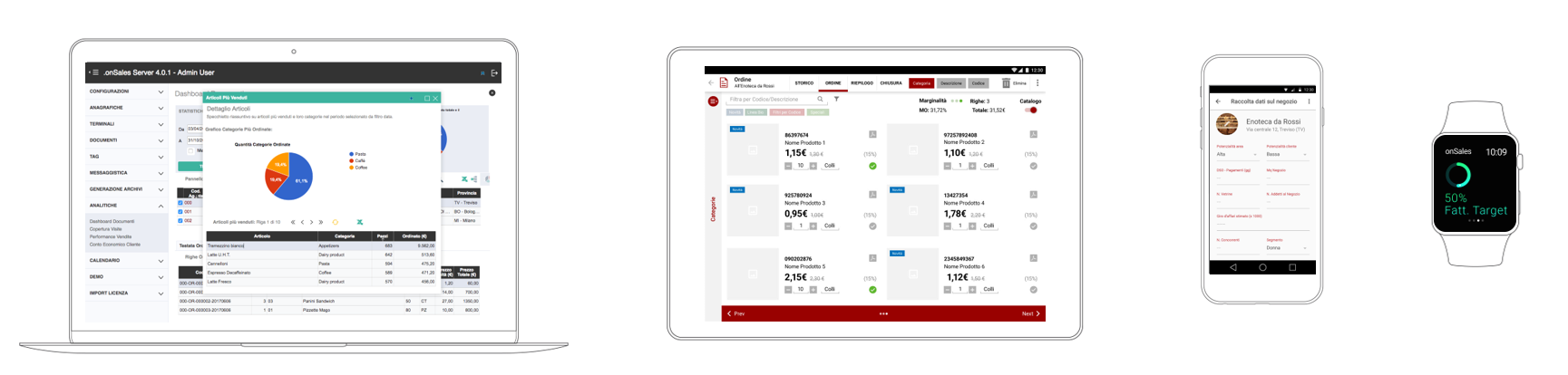
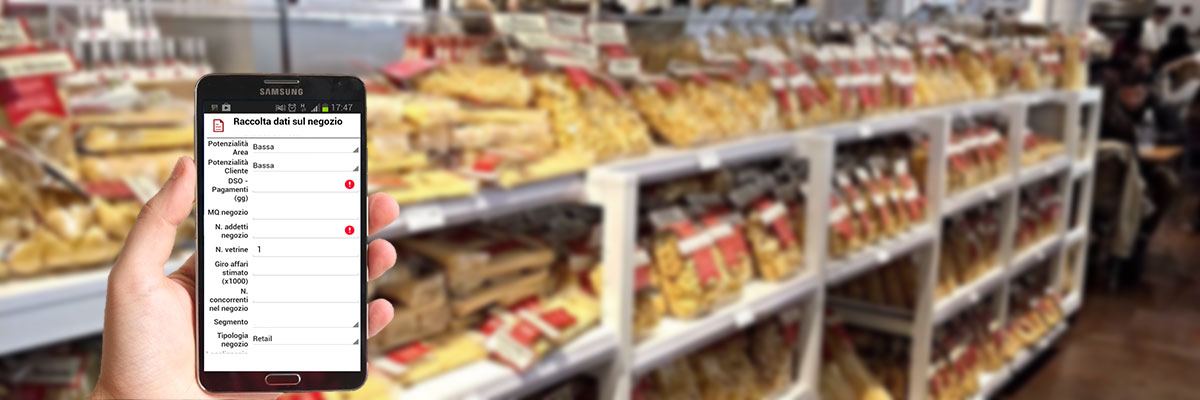
Sales Force Automation software should bring customer management, mobile order capture (including offline use), KPI monitoring and negotiation history together in a single platform. Real-time access to sales data improves visit planning, margins and performance, particularly in multichannel environments and across organised retail.
A digital sales solution allows orders to be captured on mobile devices using up-to-date price lists, active promotions and instant availability checks. It reduces errors, removes duplicate data entry and accelerates the order-to-delivery cycle, improving operational efficiency across retail and distribution.
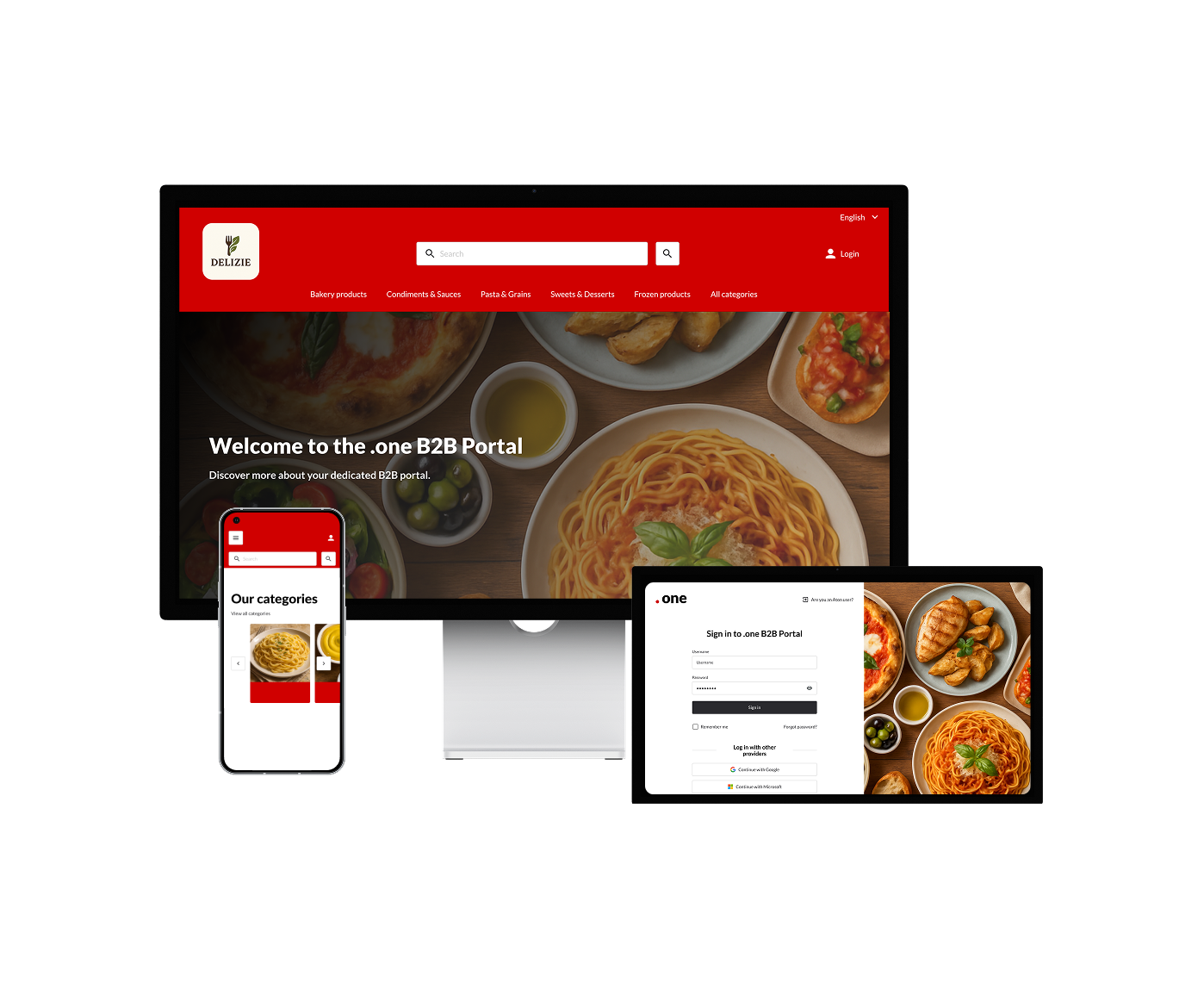
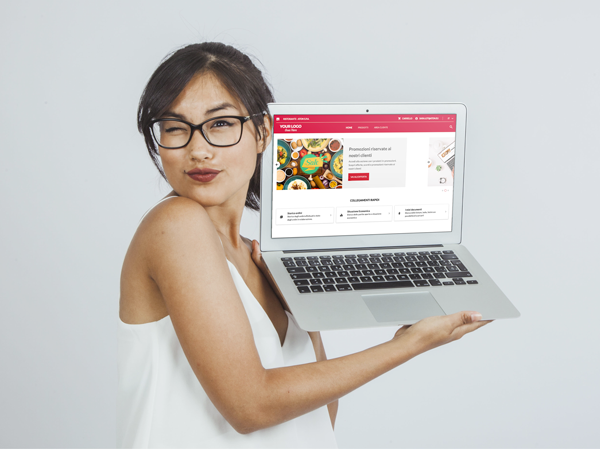
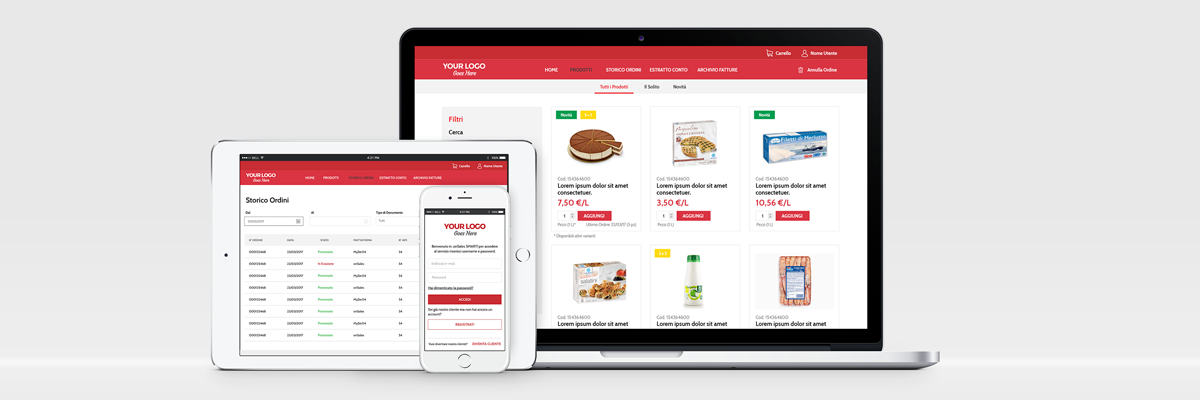
A B2B e-commerce portal for food and consumer goods businesses should integrate with ERP and sales systems to synchronise prices, terms and availability. Quick reordering, document history and customer-specific settings improve the B2B customer experience and foster loyalty, without creating conflict with the sales network.
An integrated CRM centralises sales data, marketing interactions and customer information. It supports more accurate segmentation, pipeline management and performance analysis by channel or geographical area, improving strategic decision-making, internal coordination and customer relationships.
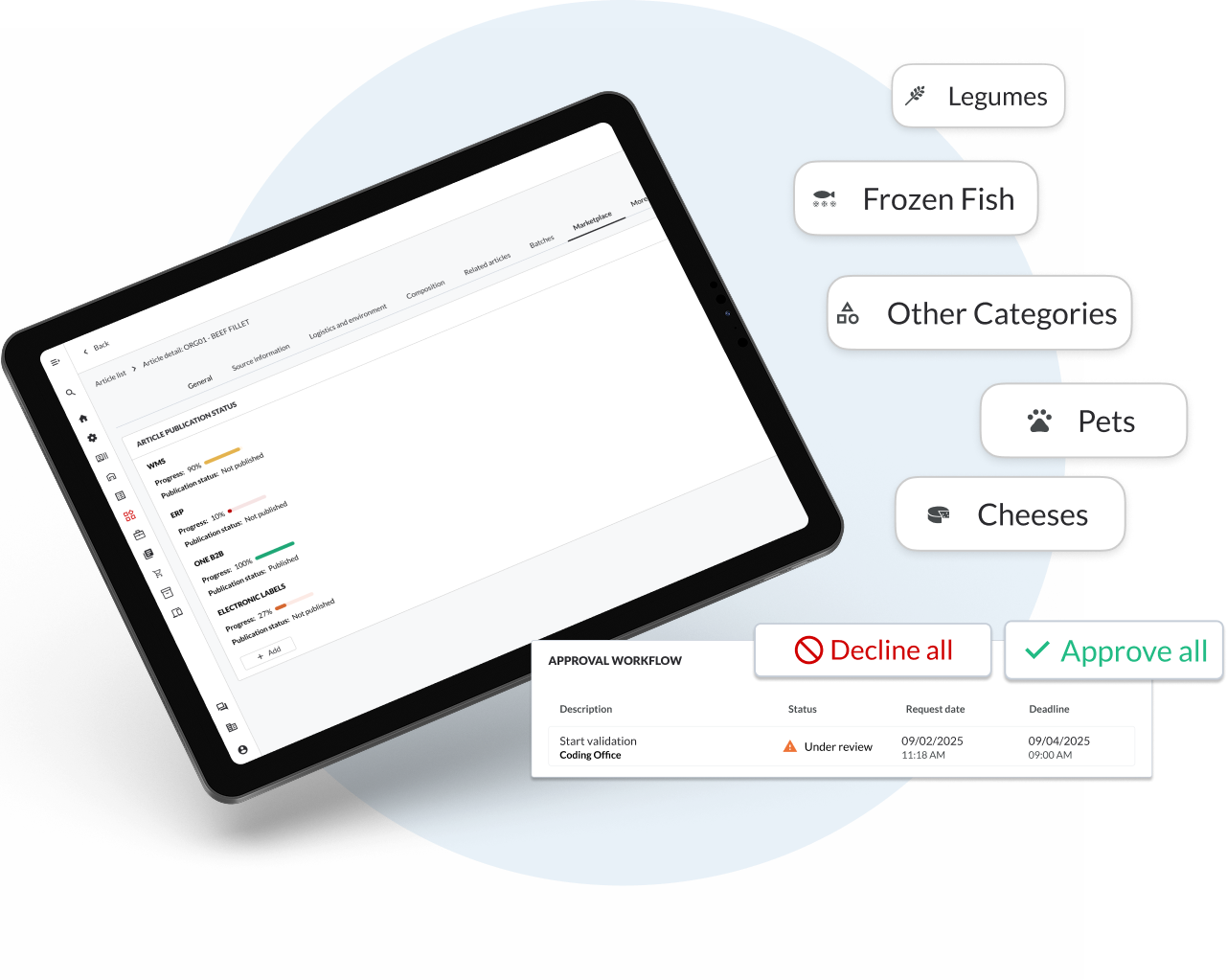
A PIM system centralises product information – variants, images, descriptions, price lists and technical specifications – ensuring consistency across e-commerce platforms, marketplaces and the sales network. It speeds up time to market and reduces errors between marketing and sales.
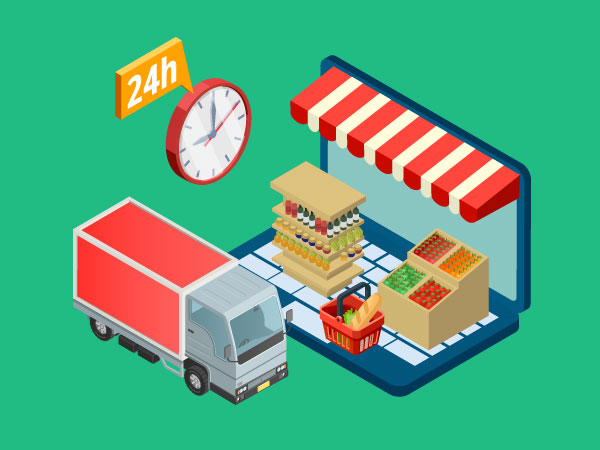
Ho.Re.Ca. customers need 24/7 access to orders, personalised terms and documentation. A B2B portal integrated with business systems provides real-time updates, reduces the workload for the back office and increases reorder frequency.
Digital traceability systems monitor batches and movements, while optimising stock levels and deliveries across the supply chain. This supports regulatory compliance, product recall management and greater transparency for partners and retailers.
By integrating sales data, promotional information and seasonal trends, businesses can forecast demand more accurately. Predictive analytics help balance production and distribution, improving stock turnover and service levels across channels.
A well-structured Service Desk enables ticket management, SLA monitoring and remote support for users and devices across the organisation. This ensures business continuity, reduces downtime and improves coordination between head office and the network.
An architecture based on API integrations and data synchronisation helps prevent information silos. A single application platform connecting legacy systems and field applications ensures consistent workflows, reduces maintenance and makes the digital ecosystem scalable over time.
The implementation of Aton’s solution allows us to collect data from the field every day and transmit it in a standardised format to Granarolo’s central systems.
Granarolo
Mario Cavallo
The new solution not only manages orders and deliveries, but also collects, processes and monitors information that is useful for profiling and mapping customers in the Ho.Re.Ca. sector.
Segafredo
Alessandro Gaiba
We manage over 16,000 items, including finished products, ingredients and packaging. This information comes from inside the company, not from external sources.
GranTerre
Massimiliano Cusumano
Thanks to our partnership with Aton, we have achieved a key competitive advantage: standardising our delivery process and gaining the benefits of document digitalisation.
Cooperativa Assegnatari Associati Arborea (3A)
Information Systems Manager
Thanks to the new app, sales reps can manage each sale smoothly, directly in front of the customer.
The centralised, collaborative PIM system that has enabled GranTerre to transform the management of tens of thousands of product records as part of the group’s digital and organisational transformation.
GRANAROLO
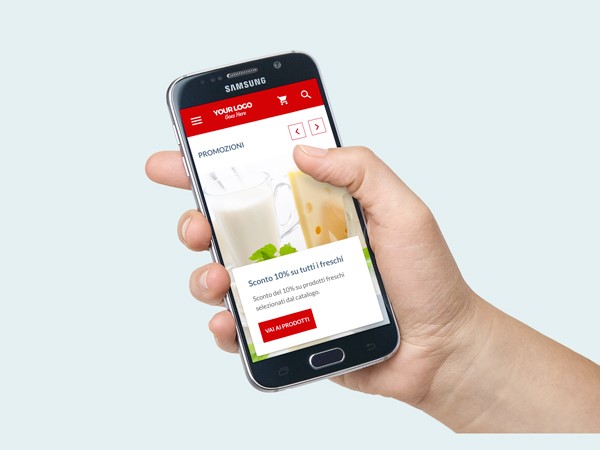
The B2B portal for Granarolo customers. Simple, quick and convenient, it allows you to place orders anywhere and at any time.
CAFFÈ VERGNANO
Caffè Vergnano has optimised communication with its sales force and the management of hundreds of devices, using a solution that streamlines operational activities, reduces downtime and makes field work more efficient.
CATTEL
The B2B portal enables Cattel customers to place orders independently, whilst allowing agents to focus on providing advice and support with product selection.