NRF 2026: what really separates companies that scale AI from those that fall behind
02/02/2026

Retail has always been a dynamic, fast-moving market, quick to spot trends and seize opportunities. It is the perfect barometer for measuring how AI is being adopted by businesses. What happens here today will happen across every other industry tomorrow — and the United States has long been a global pioneer.
In New York, from 11 to 13 January, NRF Retail’s Big Show 2026 confirmed what many had suspected and few were willing to admit: retail is undergoing a silent, yet unstoppable, revolution.
John Furner, President and CEO of Walmart U.S., opened the event with a statement that perfectly captured the moment: “What we’re experiencing isn’t just change — it’s a revolution, and AI in particular is transforming the way business is done.”
The numbers speak for themselves. According to McKinsey’s latest State of AI 2025 report, 78% of organisations already use AI in at least one business function, up from 55% the previous year. But there is an even more telling figure: only 10% of companies are deploying agentic AI systems at scale within their core business functions.
In other words, while 78% are “experimenting”, only a small fraction are actually transforming their operations.
The gap between those who scale, those who experiment, and those who remain sceptical is becoming the new competitive frontier in retail.
The physical layout of NRF tells a very clear story. Google, Microsoft, SAP, Salesforce and Zebra welcome you right at the front, with large, imposing booths. As you move further towards the outer areas, you start to encounter hardware manufacturers — with notable presences from Honeywell and Datalogic — and then smaller competitors, many of them Asian, occupying increasingly modest spaces.
Budgets reflect the size of their businesses, but above all their future growth prospects. It’s the market itself that is redefining priorities.
Today, the real competitive advantage lies in software: software that turns data into decisions and actionable plans, anticipates trends and purchasing behaviours, and rationalises operations in real time.
Walking through the exhibition halls, it’s clear that agentic AI and robotics are no longer a futuristic vision. They are already a reality.
Walmart is testing autonomous drone deliveries across 270 stores. Kroger is experimenting with last-mile delivery models based on autonomous vehicles and robots in selected markets. Google is developing agentic commerce systems that enable complex conversations and autonomous actions across the entire customer journey.
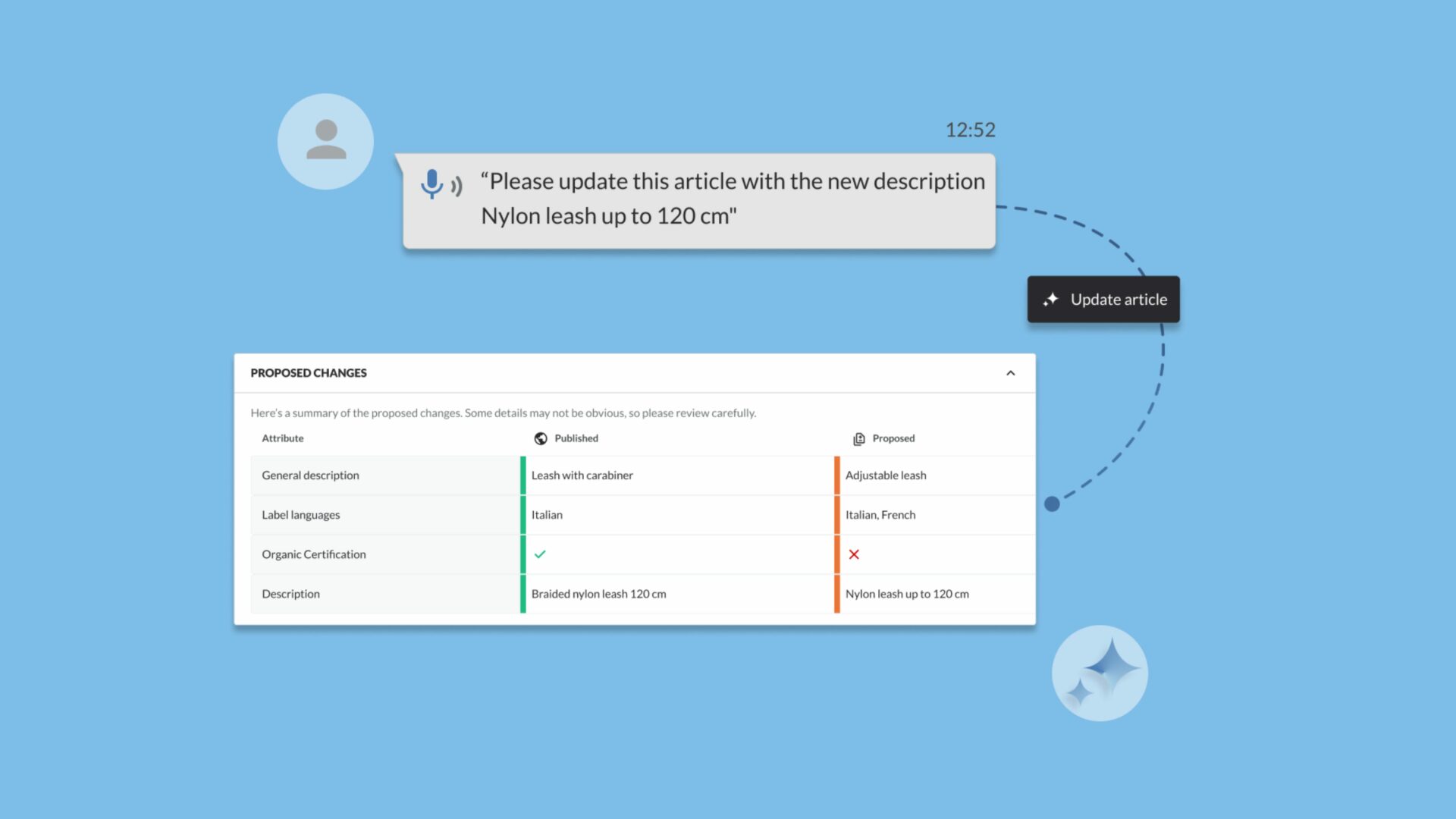
In customer support, autonomous AI agents are already delivering tangible results. AI-powered eDesk systems can automate up to 65% of customer requests, while also providing real-time reporting to optimise in-store operations.
These technologies make it possible to move from reactive to proactive management, with measurable benefits in customer trust and operational efficiency.
McKinsey estimates that large-scale AI adoption can reduce operating costs by 15% and increase revenues by 10%. But this only happens when AI has access to the right data — clean, accurate and fully integrated.
One of the clearest messages from NRF 2026 is how technologies that improve data visibility and accuracy, such as RFID and connected IoT systems, are becoming increasingly central. They enable real-time views of inventory, supply chains and decision-making processes — the foundation that makes advanced AI possible, from forecasting to predictive analytics across sales, stock levels, turnover and replenishment.
In the most advanced retail organisations, technology is not replacing people — it is reshaping and amplifying their role.
This is a point Brian Cornell, CEO of Target, strongly emphasised on the NRF stage: human interaction will remain a decisive element of the retail experience. It is no coincidence that Target’s growth over the past eleven years — up 50%, equivalent to around $35 billion in revenue — has been driven by investing in people who can use technology to create value, rather than be replaced by it.
Systems such as agentic AI are already proving their impact in this very direction. They free people from repetitive tasks and allow them to focus their time and energy on what truly makes a difference — customer relationships, advisory roles, and the ability to solve complex problems.
According to Gartner, by 2028, 15% of everyday work decisions will be made autonomously by agentic AI, up from 0% in 2024. In my view, this is a conservative estimate. This shift does not make people less relevant. It makes them more decisive.
For this reason, companies should no longer be asking simply: “Should we invest in AI?”
The real questions now are: how much and how? What are the best practices for building an AI-ready culture, embedding it into processes, and enabling organisations to capture the full potential of this enormous opportunity — as early as possible?