Nel buio, l’inclusione si fa luce
25/07/2025
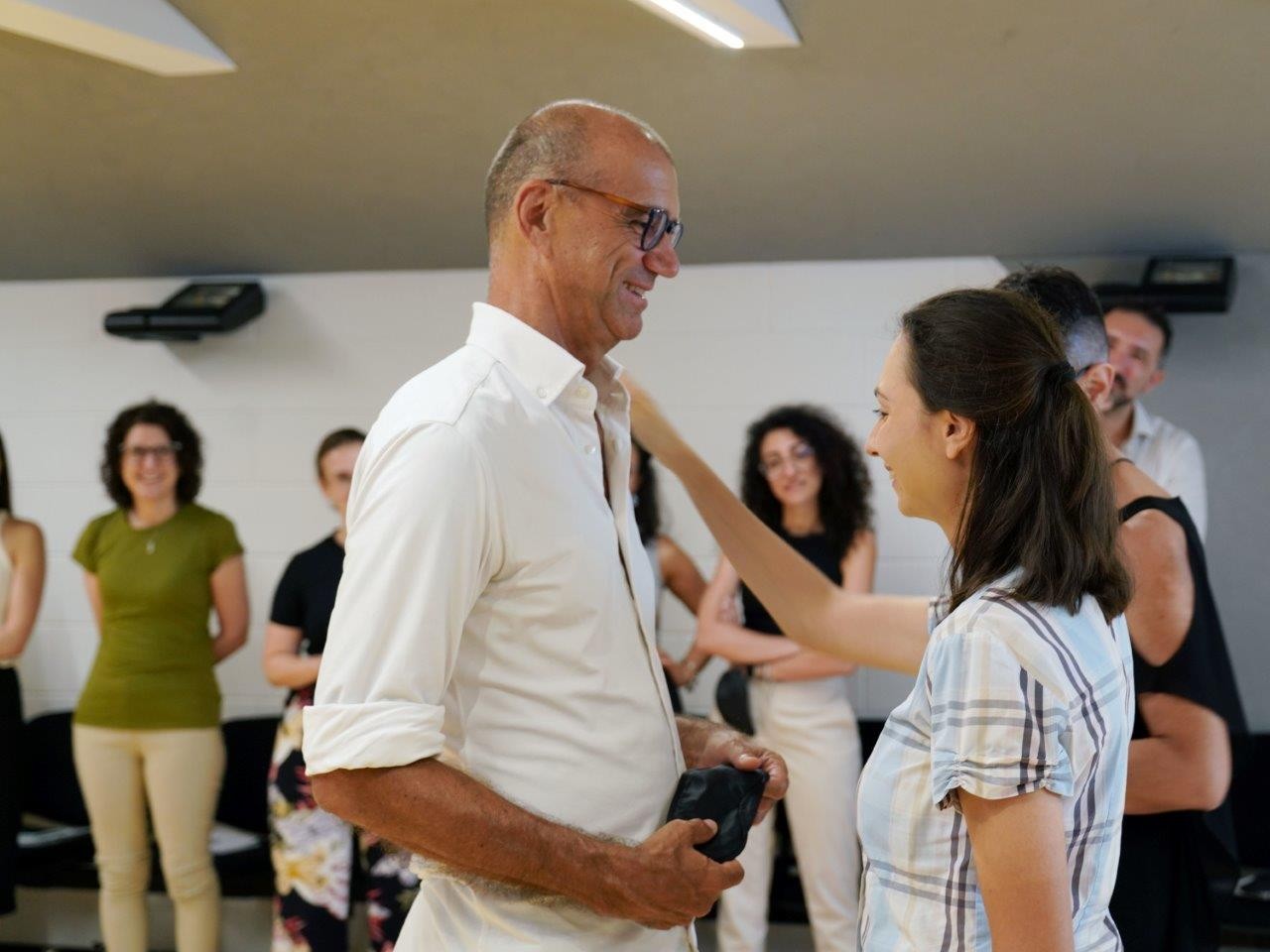
Inclusion has always played a central role in our company culture. In every part of our professional life, we are committed to ensuring fairness, care and respect for every person.
This year, to support the training journey dedicated to this very topic, our coach Moira wanted to give us a gift. During the last Palestra dei Coach in June, our monthly meeting for team leaders, we explored inclusion in a different way from usual: we experienced it first-hand.
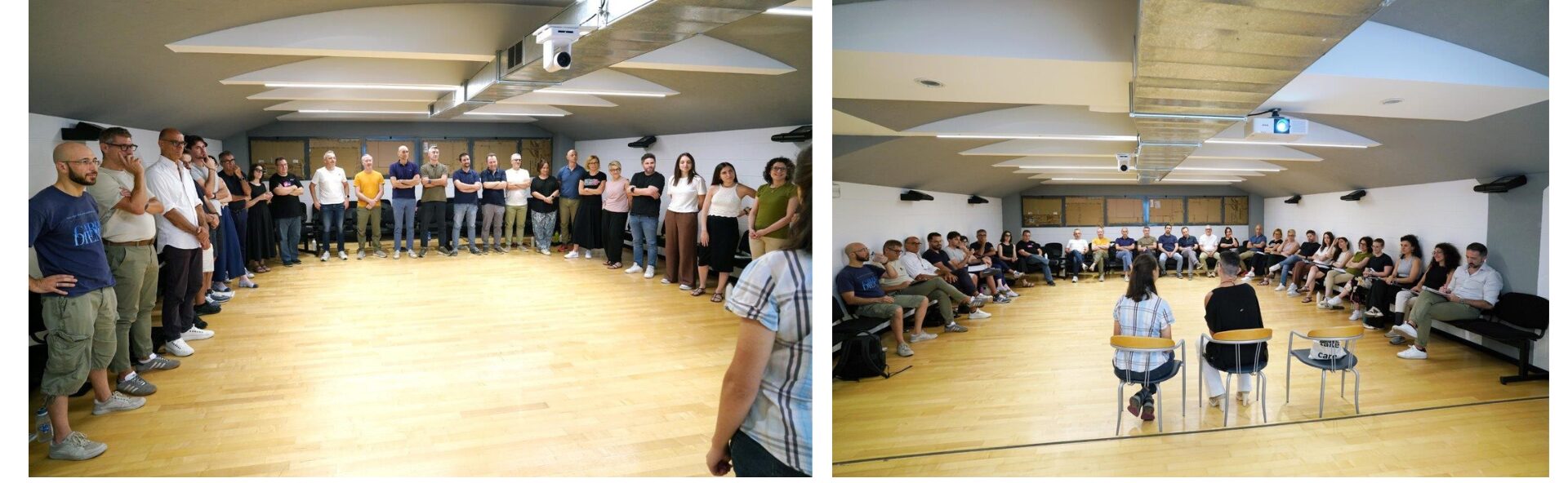
Moira wanted us to experience the true meaning of empathy, a word that is often overused, by really putting ourselves in someone else’s shoes. Or, as she always says, by walking in their shoes.
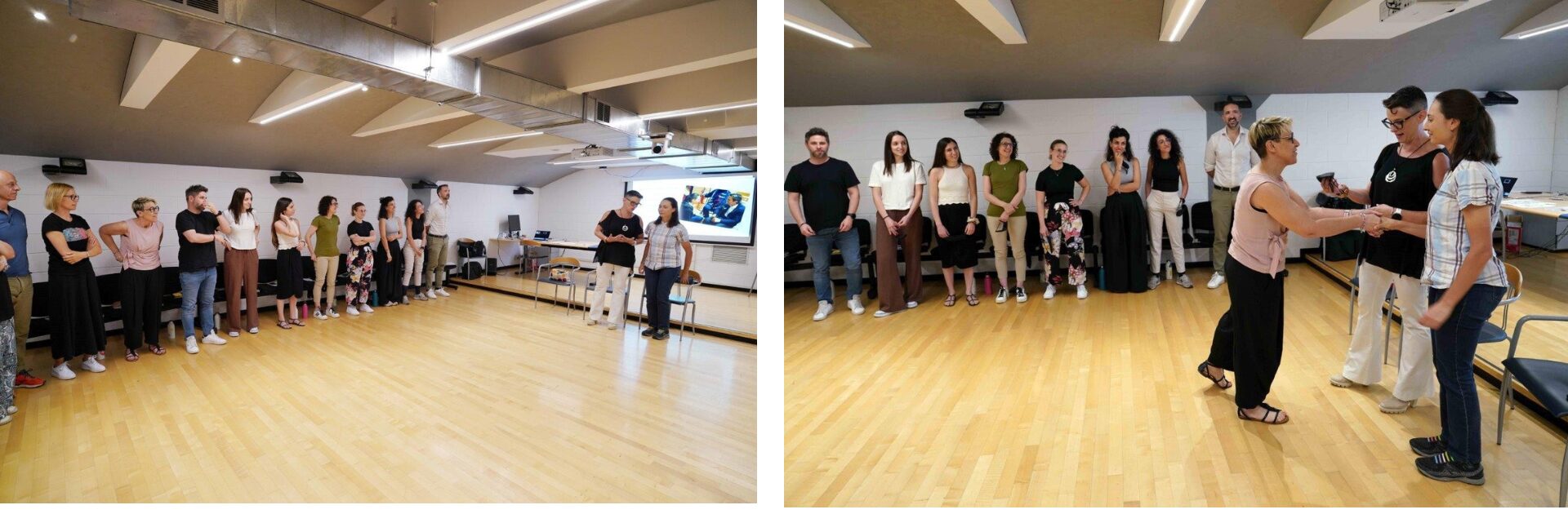
We entered a completely darkened meeting room and, after a brief introduction to our guest Beatrice and her father, we turned off the lights, put on eye masks and immersed ourselves in the darkness; and in their voices.
Beatrice is thirty years old, graduated in languages with top marks, teaches English at the high school where she herself studied, and is a para-cycling champion. Through her voice, she guided us through some stages of her personal and professional life.
She took us into the everyday difficulties of those who, like her, have been blind since birth, but also into her achievements, her choices and her determination.Her story was powerful and engaging. She was not there to teach us a lesson, yet she generously shared an experience made up of effort, barriers, both physical and relational, but also achievements, satisfaction, strength, powerful gestures such as a simple “I’ll try”, and the beauty of all those hands that helped her make possible what many would have thought impossible: practising sport and becoming a para-cycling champion. A sport with a series of implications that are anything but simple, not least having to rely completely on someone else.
Beatrice has disarming strength. She is strong, clear-headed, grounded. She can be sharp, ironic, surprising. She made us laugh, she moved us. She has character, but she also knows the value of fragility. She spoke to us about the possibility of accepting our limits, rather than fighting them at all costs, and about the freedom that can be found in asking for help, without feeling any less capable or less worthy. She told us that this is not always easy for her.
Then, in her story, there was one episode that struck us in a particular way: Beatrice contributed to a collection for a university classmate’s gift, but when the gift was handed over, amid comments, smiles and a shared sense of complicity, no one told her what was happening. No one described the gift to her, the object she herself had helped to buy.
She felt excluded.
In the darkness we were immersed in, that scene was perfectly clear. And in that moment, we understood with great force that the person who could not see was not her. It was the others. It was us.
A blindness that was not physical, but relational, emotional. An oversight born from distraction, from taking for granted that reality is the same for everyone.
If I had to describe inclusion, I would start right there. Not from a definition, but from that scene. Because inclusion means paying attention.
And then there was her father: his presence, their way of communicating, of teasing each other now and then, revealed the strength of a powerful bond, also strengthened by the harshness of life, but filled with the love and tenderness of a father who also knows how to be a friend and someone to lean on.
Practising inclusion is not easy. There is no instruction manual, no rules that apply to everyone. Sometimes we make mistakes; sometimes we do not live up to expectations, our own or those of others.
But what makes the difference is intention. And intention cannot coexist with distraction.
The experience with Beatrice reminded us of the value of active listening, and that truly listening also means knowing how to ask questions.
We said goodbye a little quieter than usual, filled with many thoughts. This meeting planted a seed, and it is now up to us to nurture it.
Everyone expects something different. There is no single way of perceiving the world. It is not enough to treat others as we would like to be treated: we need to treat them as they wish to be treated.
This experience reminded us that, sometimes, to truly see the other person, sight is not enough. We need to put ourselves in their shoes, to take a walk in them.
And, if necessary, to close our eyes and turn off the light. ❤️
Thank you, Beatrice. Thank you, Moira.
Thank you, Aton.