In search of our best companies
23/04/2025

Categories

Once the season for closing the financial statements of most companies comes to an end, the season of rankings begins, along with the related media coverage.
It is undoubtedly very interesting to follow the succession of events and publications dedicated to the results reported by our top companies. What I find limiting, however, is the tendency to consider turnover and profit as the only indicators of merit.
The question I ask myself is this: is it right to reward our best companies based on how much they invoice and how much they earn for their owners, or would it be better to rank them according to the extent to which they generate employment, social value and prosperity for the local area?
In an age in which companies can no longer be mere money-making machines and are taking on an increasingly strategic role in our society, I believe it is truly outdated to continue counting only money out of habit, as was done in previous centuries.
I believe it is very important to start valuing and raising awareness of other qualitative aspects of our companies, for example by measuring the social impact of their employment choices:
These are data points that, in my view, could be collected and classified in order to define a merit ranking and therefore identify our best companies.

Turnover and profits are not directly linked to social and environmental impact: for example, it is clear that generating quality employment in the local area – distributed, shared, collective value – has a much greater impact on our community than the speculative generation of profits for company owners, which represents financial value concentrated in the hands of a few.
Partly because labour legislation is unfortunately still too rigid and ambiguous, Italian entrepreneurs often minimise the number of people they hire on permanent contracts and prefer to have as few employees as possible, replacing them with precarious work arrangements or by outsourcing production and services outside Italy. The consequence is the progressive economic, pension and tax impoverishment of our country.
I am convinced that if we truly want to tackle the demographic crisis and the brain drain abroad, and relaunch the prosperity of our local areas, we also need to change this culture by bringing people and quality work back to the centre.
Support from policymakers and regulatory bodies is certainly needed, but it is also important for the media to start immediately by sending a different, positive and constructive signal. This applies to entrepreneurs, who can decide who to hire, where and how; to workers, who have the power to decide whether to stay in Italy or not; and to all citizens and taxpayers, in order to build a new social pact of mutual collective trust between businesses, the State and society.
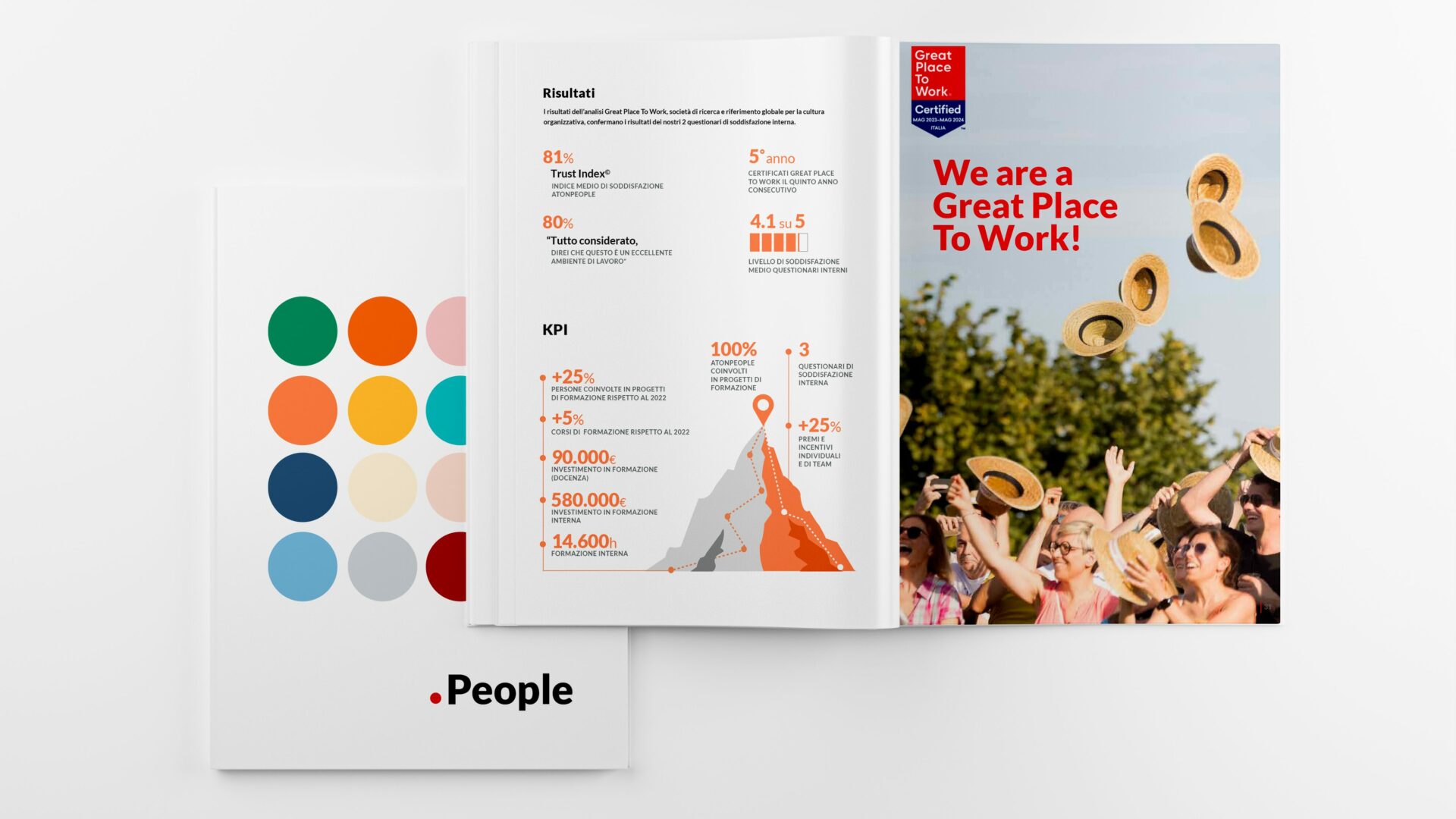
Mapping the titles and certifications that define and verify corporate responsibility could be another important element to support, helping public opinion form a clearer view of the quality of our businesses.
There are several highly authoritative examples, such as:
In Veneto, there are currently 39 certified B Corps out of a total of more than 300 in Italy, a number that is growing, behind Lombardy with 115 and Emilia-Romagna with 46, according to B Lab Italy. It is no coincidence that these three regions make up the new industrial triangle. Italian Benefit Companies have recorded a significant growth trend, equal to 37.8% in 2023 compared with 2022, while Veneto has 359 Benefit Companies out of a total of 3,619.
Their stronger performance compared with non-benefit companies is also highlighted in a recent “National Research Study on Benefit Companies” from an economic perspective: higher productivity, with value added per employee of €62,000 in 2022 compared with €57,000, and higher levels of growth in EBITDA margin, with the ratio of gross operating margin to revenue rising from 8.5% in 2019 to 9% in 2022 for Benefit Companies, and from 8.1% to 8.3% for non-benefit companies.
The research also shows that Benefit Companies place greater value on human capital, with a median labour cost per employee of €41,000 compared with €38,000, therefore returning greater wealth to workers.
It is a win-win model, offering our local areas the opportunity for an economic, social and environmental Renaissance. It must be made better known and appreciated in order to foster the development of the enormous potential of this new culture of enterprise and work: one that is both more competitive and more sustainable.