How much does an unstructured order really cost in food distribution?
02/07/2026
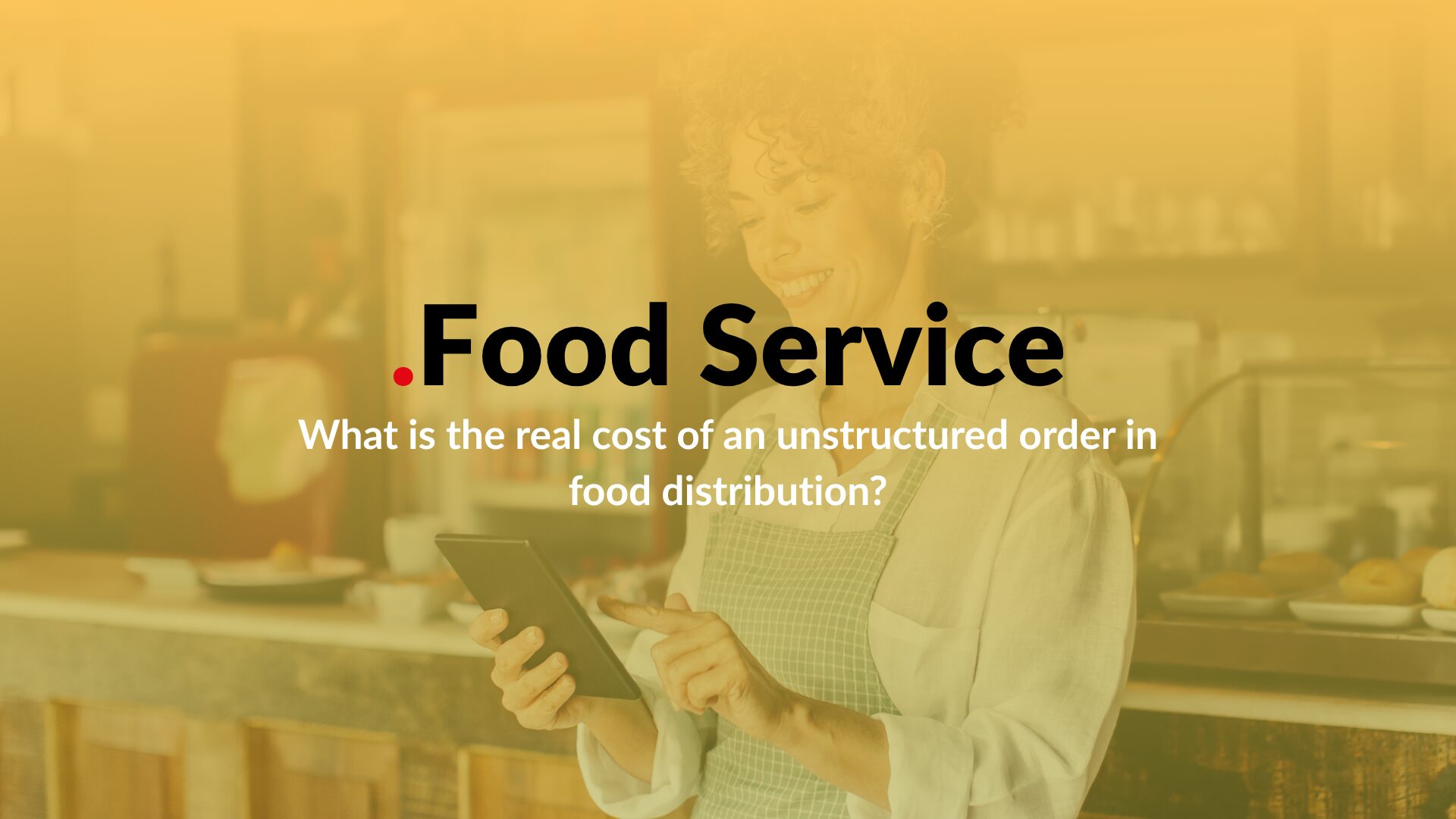
In food service, a significant share of orders still comes through unstructured channels: a WhatsApp voice note, a quick phone call, or an email written in a hurry by the chef at 11 p.m. while closing the kitchen. The message arrives, someone at headquarters reads it, interprets it, re-enters it into the management system and hopes they have understood it correctly.
With ten customers, this may be manageable. With a thousand, it becomes one of the company’s highest operating costs, yet one that very few businesses can truly quantify.
On average, an operator at headquarters spends between 5 and 15 minutes entering an unstructured order into the system: reading the message, identifying the customer, matching the items to the catalogue, checking prices and terms, entering the order lines and checking for possible errors. Multiplied by hundreds of orders a day, the result is an activity that absorbs resources, generates errors and slows down the entire supply chain.
Every correction requires a phone call, a return or a credit note. When products have a short shelf life and margins are tight, every error has a direct and immediate cost.
In food distribution, the catalogue is constantly changing: new SKUs are added, others are discontinued, prices change every week and commercial terms vary from customer to customer.
When a sales rep collects an order verbally, they do not always have the latest version of the price list in front of them. When an operator re-enters the order, they do not always know which item matches the customer’s approximate description.
The result is a cycle of corrections that repeats itself every day, taking up time that could be spent developing new customers, managing promotions and improving service.
With the.one SFA Sales Force Automation and the support of artificial intelligence, unstructured orders are interpreted automatically: the system recognises the customer, matches the items to the catalogue, checks prices and terms, and provides the operator with a structured order proposal, ready for validation. What used to take up to 15 minutes can now be completed in just a few seconds.
When the order stops being a problem to manage and becomes structured data from the outset, the entire operational chain, from headquarters to logistics, works with reliable, real-time information.
Unstructured orders are requests received through channels such as emails, voice messages, photos, Excel files or PDFs that need to be interpreted before being entered into the system. With .one SFA and AI, they can be automatically converted into structured order proposals ready for validation.
Manual order entry requires time, checks and corrections. In food service, processing an unstructured order can take between 5 and 15 minutes and lead to errors in products, prices or terms. Automating order interpretation reduces repetitive tasks and speeds up the entire process.
AI analyses the content, identifies the customer, matches products to the catalogue and checks prices and commercial terms. .one SFA then generates a structured order proposal that the operator can review and validate before sending it to the back office.
.one SFA is designed to integrate with ERP, BI, WMS and payment systems. The .one platform uses an API-first approach and synchronises data with business systems, allowing validated orders to enter the operational workflow without creating new information silos.
ROI can be measured by comparing average order entry time, number of orders processed, errors, corrections and back-office costs before and after automation. Aton reports that tasks that previously took up to 15 minutes can be completed in just a few seconds with .one SFA and AI.