RETAIL Tech 2026 | Aton GTN
01/07/2026
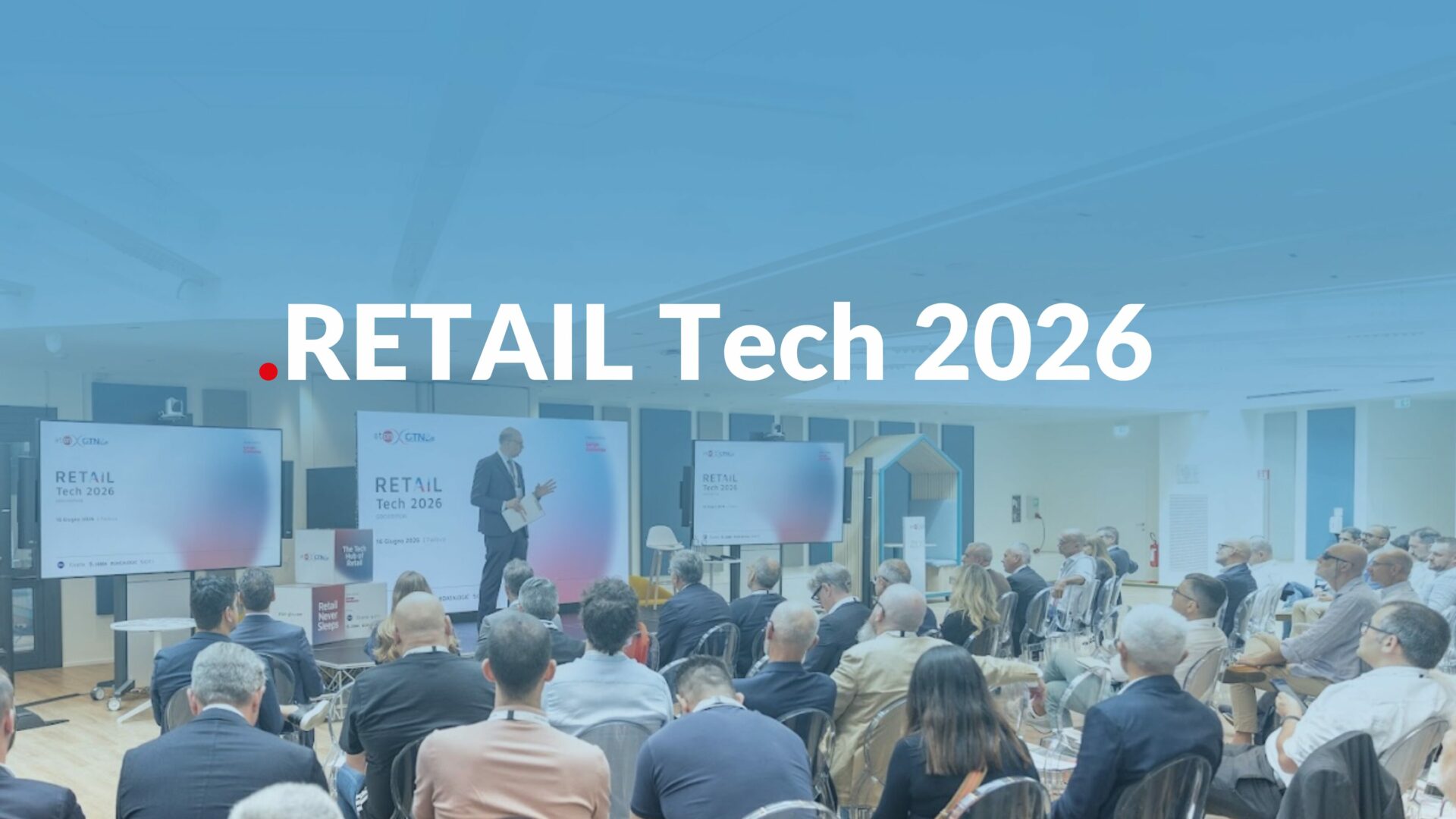
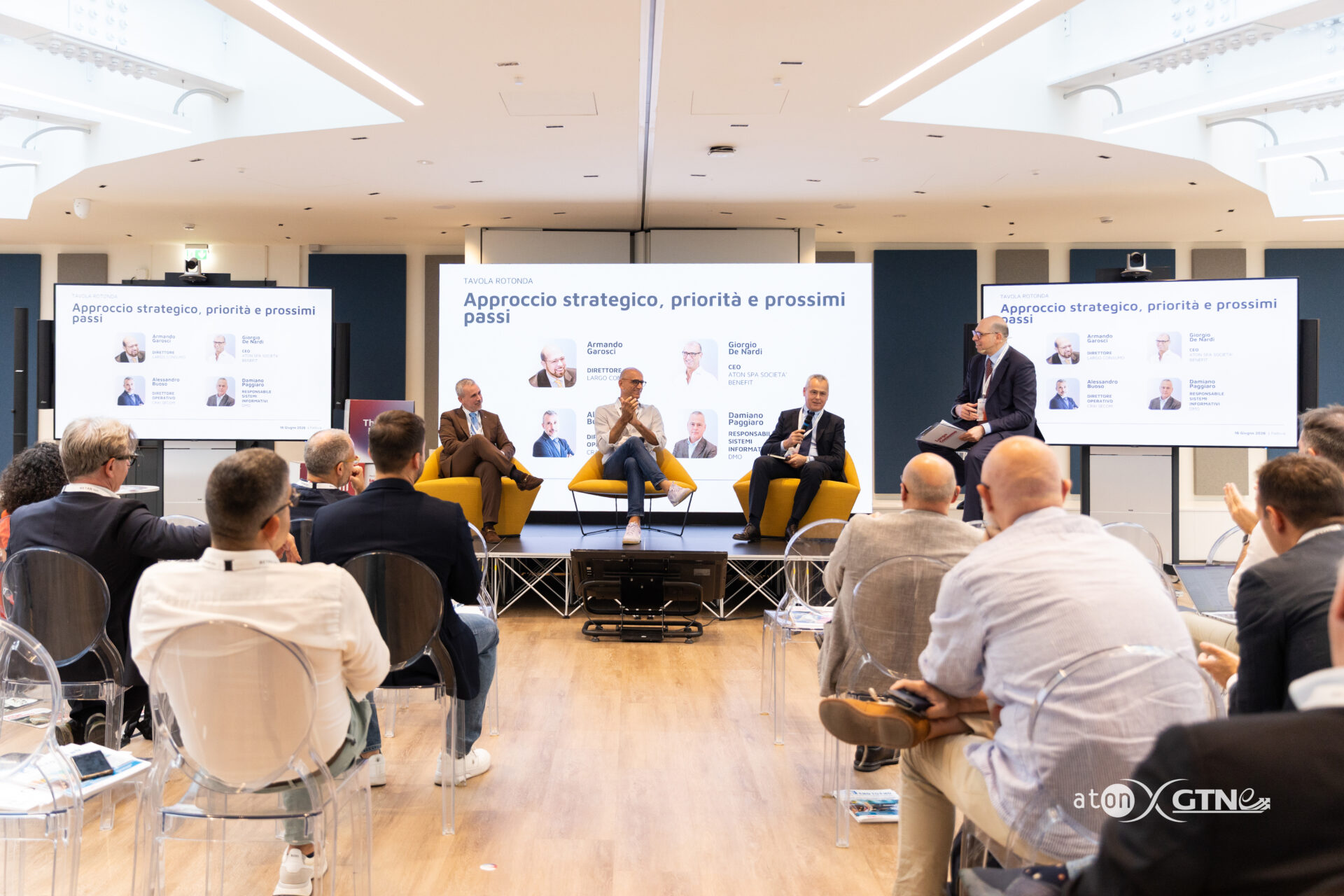
On 16 June, Le Village by CA Triveneto hosted the first event organised by the Aton GTN Joint Venture: an exclusive gathering that brought together a selected community of leading players and experts from the Grocery Retail Sector to discuss applied innovation and artificial intelligence.
AI is already part of the strategic agenda for retail companies, influencing technology choices, operating processes and reflections on data, governance, skills and new service models. RETAIL Tech 2026 | GDO edition was created from this awareness.
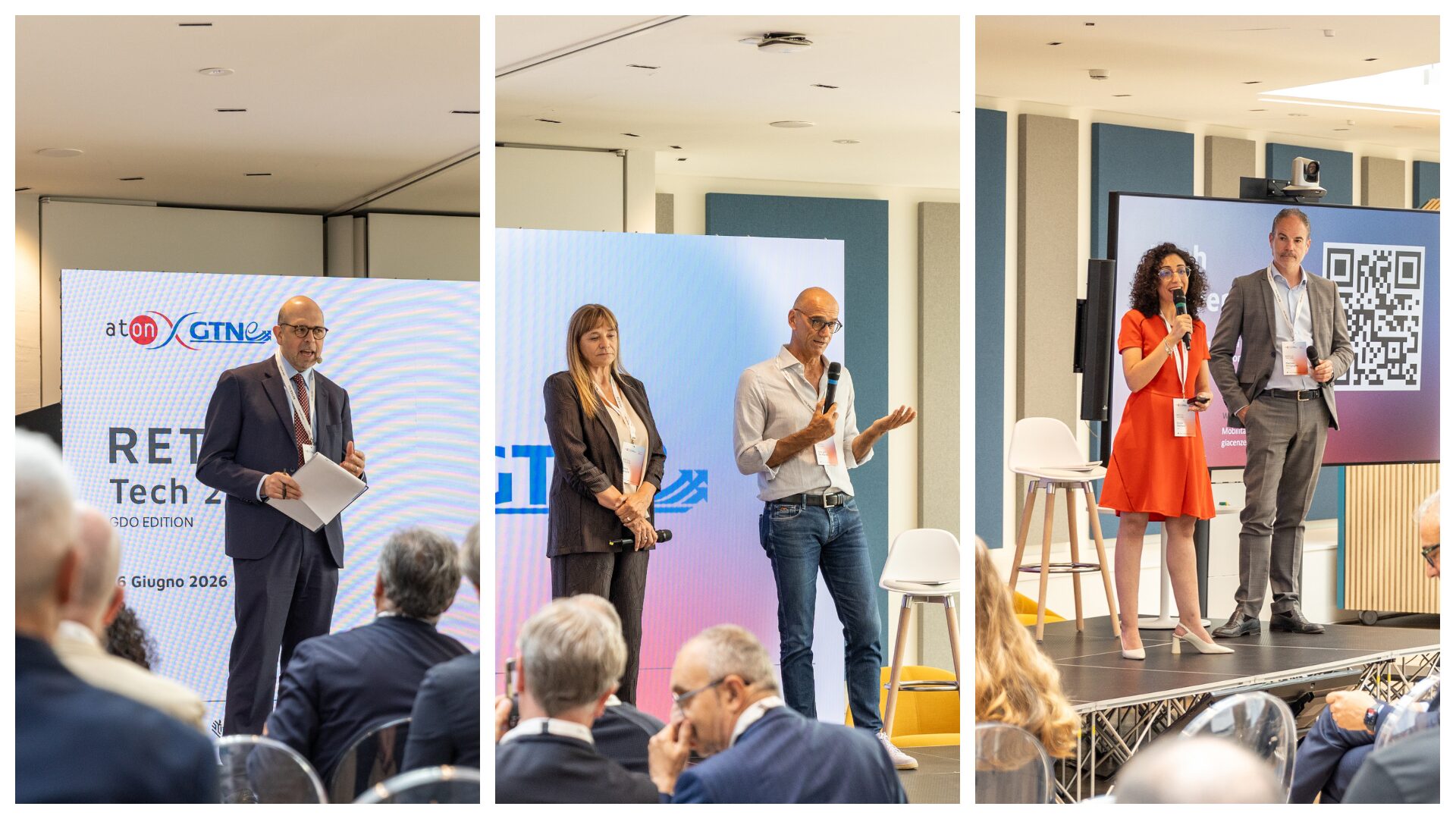
The event opened with the vision of Giorgio De Nardi and Paola Geretti, CEOs of the Aton GTN Joint Venture, who outlined the journey behind the project: to build a technological benchmark for retail, bringing together expertise, solutions and a culture of innovation.
Armando Garosci, Editor-in-Chief of Largo Consumo, guided the different sessions, connecting market scenarios, use cases and the priorities of distribution companies.
One of the key moments focused on the “AI in grocery retail” survey, presented by Matteo Sinigaglia, General Manager of Fòrema, and Giulia Stefano, Product Prototyper at Aton.
Italian grocery retail no longer sees artificial intelligence as a futuristic concept, but as an imminent operational necessity. The survey reveals a sector that is evolving quickly: 68% of companies are experimenting with AI and 12% say they have adopted it with tangible benefits. However, the real turning point lies in the ability to scale it industrially, integrating it into processes, systems and the organisation as a whole
And it is precisely when bringing AI to industrial-scale implementation that the AI Act comes into play: transformation requires awareness, responsibility and a clear regulatory framework.
The theme of responsibility was explored in depth by Valeria Lazzaroli, President of Fondazione E.N.I.A., with a focus on governance, compliance and the need to build safe, clear and sustainable adoption models.
It is not just a matter of making a new technology work, but of making it replicable and sustainable across large volumes of data, complex logistics networks and hundreds of physical stores.
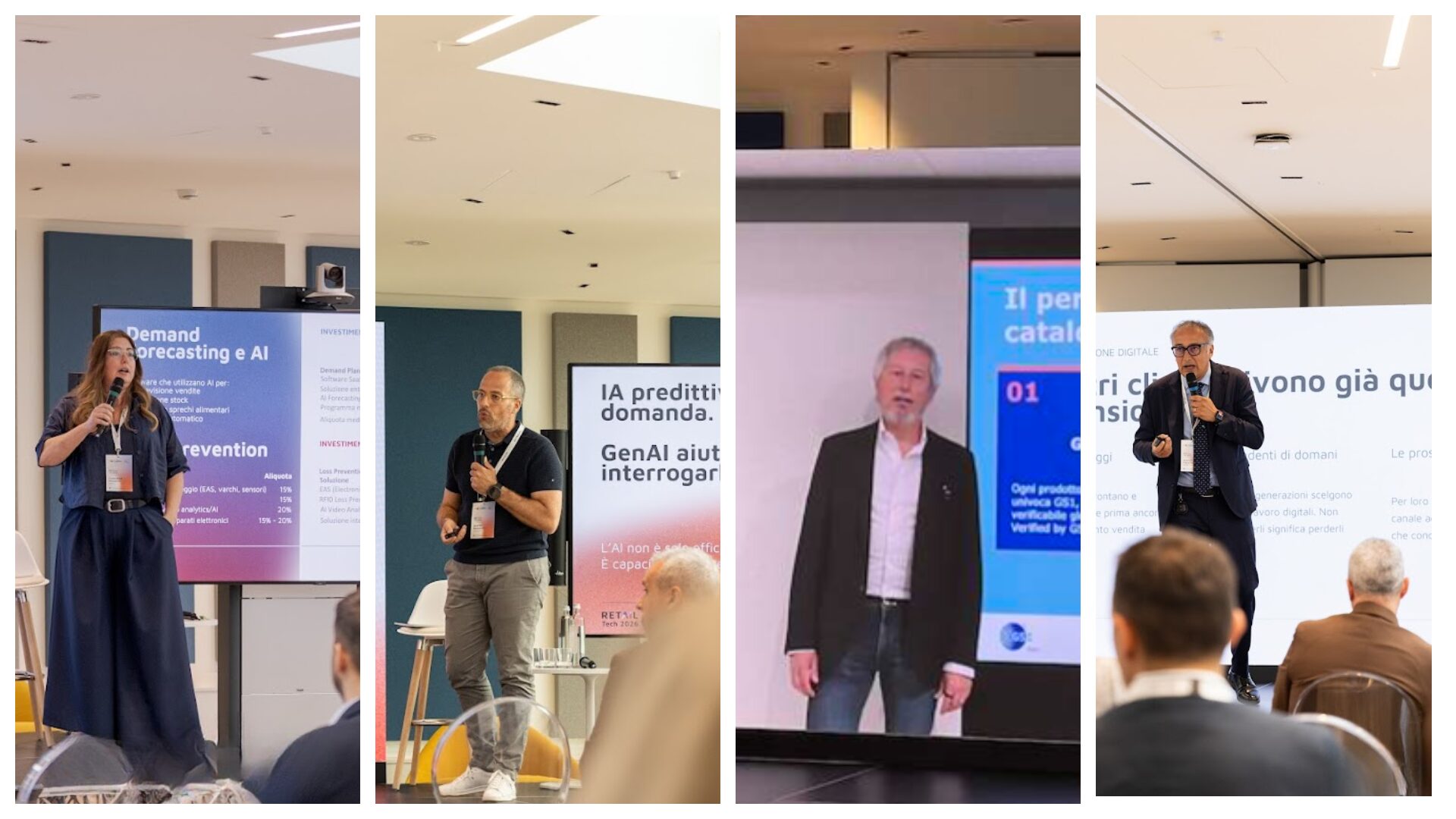
The store was also at the centre of the talks by Enzo Tumminaro, Regional Sales Director at Zebra Technologies, and Rosario Casillo, Executive VP at Datalogic, who showed how AI, data capture, machine vision, mobile solutions and advanced control systems can support operational efficiency, safety, loss prevention and business continuity in stores.
As shown by Piero Pescangegno, Chief Operating Officer at Aton, all of this must be governed by solid architectures, interoperable systems and a reliable information base. Only in this way can AI move beyond isolated experimentation and become a real everyday decision-making support tool for retailers.
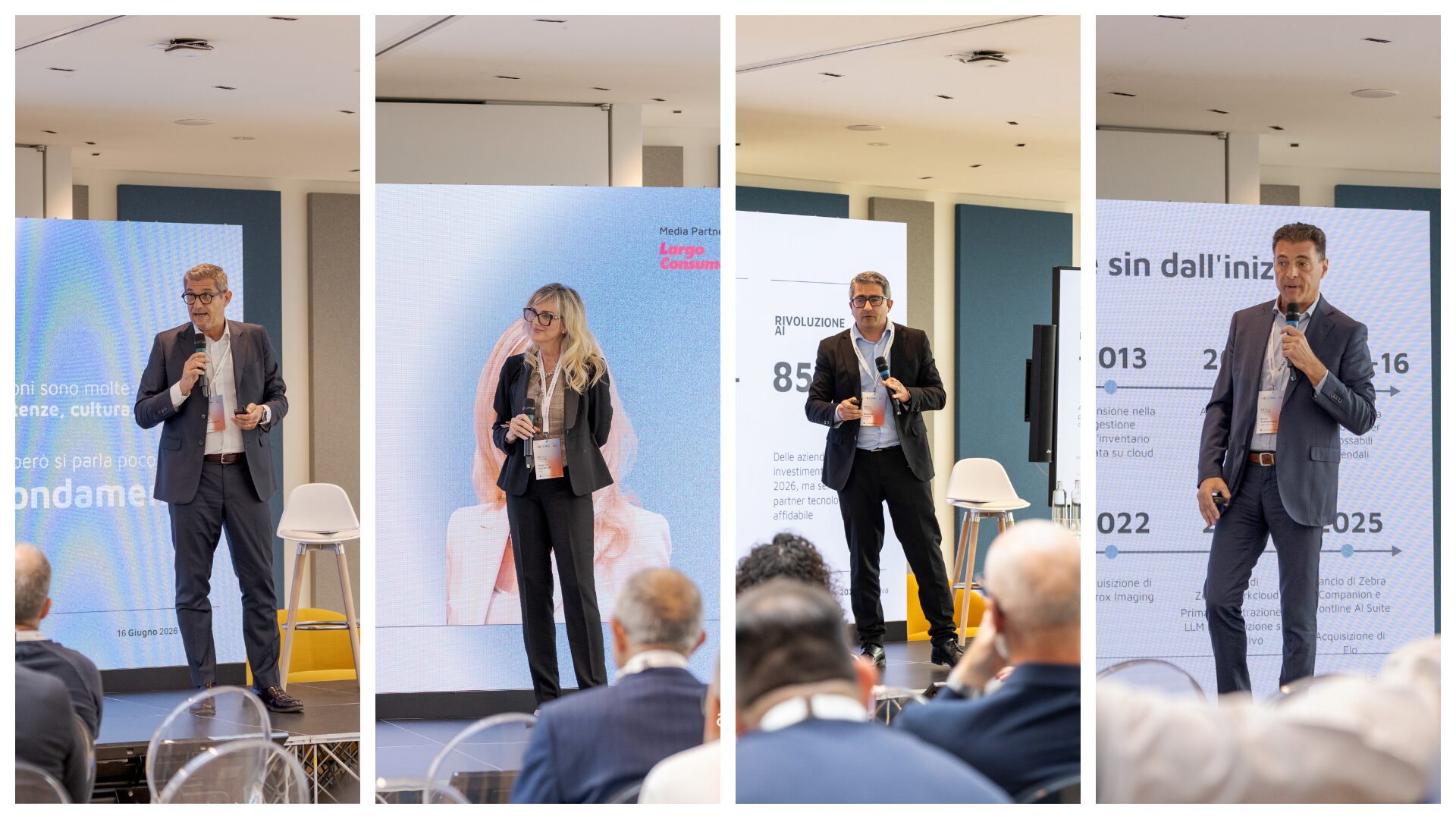
With Antonio Capodieci, Digital Transition Expert at the Presidency of the Council of Ministers and Lecturer in Information Systems at the University of Salento, and Andrea Benedetti, Sr Solution Engineer Data & AI at Microsoft Italia, the discussion shifted to the strategic imperative of cultural and managerial change. AI creates value when it is seen as an opportunity to rethink processes, decisions, skills and ways of working.
With Andrea Ausili, CIO Standard & Innovation Director at GS1, the focus then turned to the evolution of product standards and Agentic Shopping: a scenario in which structured, machine-readable and easily accessible data will become increasingly important for visibility, compliance, traceability and new shopping experiences.
The day also explored the tax incentives available to support innovation, thanks to the contribution of Francesca Rossetto, Innovation & Development Manager and Smart Factory Manager at Fòrema. What does hyper-depreciation involve? What are the updates to Annexes IV and V of the 2026 Budget Law?
RETAIL Tech concluded with a round table featuring Alessandro Buoso from CRAI Secom and Damiano Paggiaro from DMO. It was a valuable discussion that brought the themes of innovation back to the everyday challenges faced by retail companies: efficiency, standardisation, store autonomy, integration and the ability to measure results.
A clear message emerged from RETAIL Tech 2026: the future of grocery retail is not built simply by adopting new technologies, but by creating connections between people, skills and processes.
At Aton, we believe this conversation is only the beginning of a much broader journey.
Stay tuned!